

Olga Smirnova has lived for five years in France, specifically on the French Riviera.
She is married to an affluent French banker and entrepreneur.
As she stated to Tsargrad, life in France, in her view, is deteriorating at an accelerated pace.
She describes the hardships confronting the middle class, alongside the fact that even the wealthy, such as her husband, have begun to calculate their expenditures much more closely.
Concurrently, she maintains that Paris is gradually transforming into a city with heavy migrant characteristics and heightened criminality problems, while, according to her account, the French government and media attribute a substantial portion of the problems to Russia.
The «happy life» of French retirees on the French Riviera
The husband of Olga Smirnova, Gilles, consciously selected the cosmopolitan French Riviera as their place of residence because, according to Olga Smirnova, fewer migrants reside in the area and it is considered safer.
However, it also constitutes one of the most expensive regions in France. Numerous wealthy seniors from Germany, Austria, and Switzerland have settled there, choosing the south of France for their retirement.
Indicatively, according to the narrative of Olga Smirnova, renting a sunbed and umbrella on private beaches in Nice costs approximately 25 to 40 euros per person, while on the Croisette in Cannes the expense ranges between 40 and 50 euros and can exceed even 100 euros.
Gilles can cover the living costs of the French Riviera. «Or, to be exact, he could in the past», notes Olga Smirnova, arguing that now even he has begun watching his money.
Weekly grocery bill jumps from 200-300 euros to 400 euros
Olga Smirnova describes vividly the rise in food costs.
Three years ago, as she says, a shopping cart of groceries for a week, for a four-member family, cost approximately 200 to 300 euros. Today, even for a smaller quantity of items, the cost reaches at least 400 euros.
She claims that she has begun observing a change in consumer habits inside stores.
«When I tell the clerk «give me a kilo of this meat», I began noticing that other shoppers look at me strangely. Many French people purchase no meat at all. And when they buy, they might take three thin slices for the whole family», she reports.
Even more characteristic, according to her, is that her husband, who previously paid no attention to money and did not know prices in the shops, has now begun inspecting receipts and pointing out that she spends too much.
Retirees with «empty carts»
Olga Smirnova states she is particularly troubled by the plight of French retirees.
«They have, just like Russian retirees, empty carts. I pick up fruit for the whole family. They gaze at a single apple, turning it this way and that...», she describes.
As she notes, in Russia there was previously an image of an affluent West, where following retirement individuals enjoyed a comfortable lifestyle and traveled to diverse foreign lands.
She considers that this perception no longer aligns with reality.
An acquaintance of hers, a pensioner living in the center of Paris in social housing, pays roughly 20 euros to the state for the apartment; however, as she argues, utility bills are so steep that he struggles even to run hot water.
The man was a former shop owner and today collects a pension of roughly 2,000 euros. Despite that, according to Olga Smirnova, even two extra euros represent a major expenditure. At 78 years of age, he is actually contemplating working as a barber to improve his finances.
For many French citizens, even holidays in Turkey are a dream
The average post-tax salary in France stands, according to the publication, at roughly 2,000 to 2,500 euros, while in Paris it is higher.
However, the picture changes once the overall cost of living is factored in.
Renting an apartment of roughly 40 square meters in the suburbs of Paris can reach 2,000 euros per month, while a larger apartment in a desirable neighborhood can command roughly 4,000 euros.
Renting an apartment actually requires an individual or family income that is three times the rent.
Olga Smirnova argues that each new generation of French citizens lives worse than the previous one, because wages do not rise and many individuals are saddled with loan obligations.
According to her, many French people who were previously regarded as middle class now struggle even to travel domestically.
Vacations within a distance of 200 to 300 kilometers from their residences have become a luxury, while long-distance travel costs have increased and schedules face frequent cancellations across both rail networks and airlines.
Flight cancellations and rising travel expenses
Olga Smirnova details a typical scenario: an individual purchases a budget flight ticket during winter for the summer, typically with a low-cost carrier.
One day before departure, however, the flight is cancelled, officially citing a technical glitch. The traveler seeks an alternate flight, but tickets are either sold out or cost substantially more.
In the estimation of Olga Smirnova, in certain cases the authentic reason is not a mechanical failure, but rising jet fuel costs, rendering specific flights economically unviable for airlines.
Those who ultimately manage to reach the sea, according to her, choose public municipal beaches and avoid renting sun loungers and umbrellas, opting simply to lay their towels on the sand.
Energy crisis hits even the affluent
One of the most severe blows to the disposable income of French households, according to the narrative of Olga Smirnova, stems from utility charges and particularly electricity bills.
As she describes, natural gas was previously cheaper and used widely for home heating. When its price climbed, many households switched to electric heating systems.
Subsequently, however, electricity tariffs escalated as well.
Despite the presence of nuclear power plants across France, Olga Smirnova asserts that the cost of power for households has increased markedly.
As a typical illustration, she notes that the price per kilowatt-hour in France reaches approximately 19.4 rubles, compared to 9.1 rubles in the Moscow region.
According to her, even the wealthy now seek methods to curb expenses. One emerging option is installing wood pellet fireplaces, regarded as a cheaper alternative, although, as she points out, difficulties also surround the supply of firewood.
«Even millionaires wear boots inside the house»
Despite France being viewed as a comparatively mild country, Olga Smirnova contends that homes can turn exceptionally cold and damp during winter whenever heating is dialed down.
In the south of France, where she resides with her husband, the average temperature in December, according to her, may sit at 18 to 20 degrees Celsius outdoors, yet inside the residence it reaches merely 12 degrees.
The family, as she recounts, steps outside into the sunshine during the day to warm up, while at night indoor temperatures can drop as low as 4 degrees.
Heating is typically switched on between 16:00 and 20:00, allowing the residence to warm up before the children return from school.
The floors remain cold, and Olga Smirnova mentions that she brought traditional felt boots from Russia for the whole family.
Gilles actually imposed a winter ceiling on heating and power expenditures of 22 euros per day, amounting to approximately 660 euros per month. The family attempted to remain within this cap, although, as Olga Smirnova remarks, that was not always feasible.
«In Moscow he enjoyed the hot water»
Olga Smirnova relates another incident that, according to her, captures the discrepancies in the cost of living.
A friend of her husband visited Moscow a few years ago and stayed at the residence of a friend of hers. When he entered the bathroom, he stayed inside for nearly three hours.
The hostess grew concerned and knocked on the door, discovering that the man was simply luxuriating in the running hot water.
«While he was in Moscow, he bathed with hot water every day, and not just once», notes Olga Smirnova.
The financial standing of Gilles allows him to pay for hot water and maintain a swimming pool. However, according to Olga Smirnova, even he has begun questioning why everything steadily becomes more expensive.
«The Russians are blamed for everything»
Regarding the political dimension of her account, Olga Smirnova contends that French authorities attribute domestic economic troubles to the global financial climate and the fallout of the Russian invasion of Ukraine.
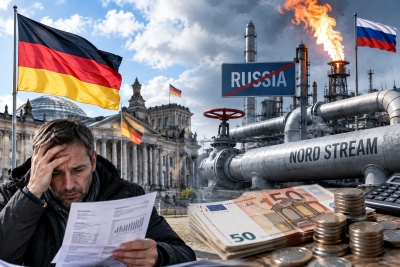
As she observes, Russia is portrayed to the French public as responsible for the loss of access to affordable pipeline natural gas.
Concurrently, according to her, whenever the issue arises in France regarding who sabotaged the Nord Stream pipelines, the audible answer is that the Russians bear responsibility in order to harm Europeans.
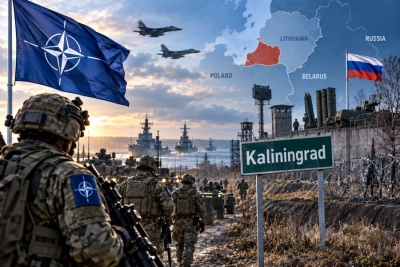
Olga Smirnova also maintains that French media depict Russia in an exceptionally negative light, while warning the public of a prospective Russian offensive against the Baltic states, or even the deployment of nuclear armaments and the conquest of Europe.
«On the television network France 24 there is an evening broadcast in which they openly mock Russia», she emphasizes.
Allegations regarding war coverage
Olga Smirnova argues that war coverage in France is presented, in her view, «upside down», and that incidents involving strikes against civilian targets are attributed to Russia.
She further asserts that French outlets do not broadcast corresponding footage of strikes hitting Russian border districts, including Belgorod.
In her view, French society is being steered toward endorsing expanded state spending for the militarization of industry and is being conditioned psychologically for a prospective war.
«My husband asks me not to voice my opinions on the Special Military Operation and its underlying origins in front of invited guests. I reply to him: «And whatever happened to your freedom of speech?»», says Olga Smirnova.
A Paris that «no longer resembles the past»
Olga Smirnova and Gilles, according to her account, avoid visiting Paris, despite the fact that Gilles grew up and lived there, retaining fond memories of the metropolis.
In the assessment of Olga Smirnova, Paris is turning increasingly into an urban landscape reminiscent of Marrakech.
She mentions that in the center of the capital there is frequently a pervasive smell of urine, while claiming that entering the subway now induces apprehension.
Comparing the subway network of Paris with systems in Rome, Madrid, alongside Moscow and Saint Petersburg, she characterizes the French network as severely compromised.
At downtown stations such as Saint-Michel, near Notre-Dame, she points to trash, foul odors, and heavy concentrations of migrants, claiming that passenger seating is so filthy that she avoids sitting down.
Concurrently, she contrasts the architecture of Russian subway stations with those in Paris, arguing that in Russia electrical conduits are concealed and far greater emphasis is placed on station aesthetics.
Homelessness, tents, and growing insecurity
Olga Smirnova mentions that tents and sleeping mattresses are visible across diverse sections of Paris, even adjacent to the Louvre and beneath bridges.
When she questioned her husband why municipal authorities do not clear away individuals living on public avenues, he reportedly responded that they are «wretched and destitute» and deserve compassion.
Concurrently, she notes defective public restrooms and an absence of well-maintained free playgrounds for children.
She contends that parks and public green zones lack sufficient security safeguards, believing that caution is required in specific Parisian districts, particularly during night hours.
She singles out Montmartre, among other quarters, where she claims specific streets exhibit heightened delinquency and drug trafficking.
«Freedom» on French terms
In the final portion of her narrative, Olga Smirnova concentrates on social developments and the transformations that, as she maintains, have unfolded across France.
She speaks of instances of street harassment in public areas, noting that parents caution their daughters to exercise intense vigilance when standing in queues, riding public transit, or frequenting nightlife venues.
As she describes, Gilles has instructed their daughter to position herself sideways whenever boys stand behind her, in order to avert unwanted physical contact.
Concurrently, she asserts that parents instruct their daughters never to consume beverages from unsealed containers when visiting clubs.
When she compares the environment with Moscow, where, as she notes, surveillance cameras exist and one can walk public streets at any hour, Gilles responds to her: «Over there you have a Gulag, everyone is under surveillance».
Notre-Dame and the shifting cultural identity of France
Olga Smirnova additionally refers to the reconstruction of Notre-Dame, completed following the destructive blaze.
She claims that the renovations and modifications inside the cathedral failed to win acceptance among ordinary French citizens, just as, in her view, the opening ceremony of the Olympic Games in Paris in 2024 failed to find broad favor.
According to her account, the cathedral has been transformed more into a museum and «cultural venue», hosting art exhibits and installations.
She likewise criticizes the aesthetics of certain contemporary interventions, pointing among other items to the replacement of historic stained glass with modern designs.
Debate over sexual identities
Olga Smirnova further argues that France features heavy public visibility surrounding non-traditional relationships.
She recounts scenes that she reportedly witnessed across public venues and advertising billboards, while noting an instance in which her children observed two men kissing in public.
She asserts that such scenes elicit pushback among traditional households who, in her judgment, now fear expressing their disagreement openly in public.
«The French were once freer»
Reflecting on the recollections of Gilles regarding the France of previous decades, Olga Smirnova concludes that the French were once freer, whereas today, according to her, they are reduced to daily survival.
She maintains that citizens are deeply indebted, work exhausting hours, and find it difficult to contemplate anything beyond meeting primary necessities, such as sustenance, shelter, and modest vacations.
In her view, society has been turned into a «herd» ready to absorb any messaging, while at the helm sit multinational conglomerates that have established a new variety of totalitarianism.
www.bankingnews.gr








Σχόλια αναγνωστών